
Your customers now ask AI where to eat, who to hire, and which local business deserves their money. If your business does not appear in those answers, your competitors can capture the demand before you ever enter the conversation.
That does not mean Google disappeared.
It means search expanded.
Google AI Overviews, AI Mode, ChatGPT Search, Gemini, and Perplexity now summarize information from websites, business listings, reviews, directories, and media coverage. Your job is no longer just ranking on a results page. You must become a clear, credible source that these systems can understand and cite.
What does “getting cited by AI” actually mean?
A citation means an AI-generated answer links to your website, business profile, review source, directory listing, or a publication that mentions your company.
For example, a customer might ask:
“Who offers personal branding coaching for small business owners in South Florida?”
An AI answer may recommend several providers. It may cite each business’s website, Google Business Profile, LinkedIn page, media mentions, or third-party reviews.
That recommendation usually rests on repeated evidence.
Your business must look real, relevant, trusted, and easy to verify across the web.
Google explains that AI Overviews and AI Mode rely on existing Search systems, relevant web content, and links to supporting sources. There is no secret “AI citation” tag you can add. Start with Google’s official guidance on AI features and your website.
The rule is simple:
Make your business easy to understand everywhere.
How do ChatGPT, Gemini, and Perplexity decide what to cite?
No platform publishes its complete ranking formula. Anyone selling a guaranteed AI citation is selling hype.
Still, the major systems repeatedly reward the same fundamentals:
- Clear relevance to the question
- Accurate business information
- Strong first-party content
- Consistent third-party mentions
- Fresh, useful information
- Evidence of customer trust
- Pages that search engines and AI crawlers can read
ChatGPT Search can browse the web and cite current sources, as OpenAI explains in its ChatGPT FAQ. Perplexity also builds answers from live web sources and displays citations beside its claims. Google’s AI features pull from its broader Search ecosystem.
Different engines.
Similar expectations.
If your website says “we help businesses grow,” but your profile, reviews, directory listings, and service pages never explain how, where, or for whom you help, AI has little solid evidence to use.
Vague businesses rarely earn specific recommendations.
Is your Google Business Profile ready?
Your Google Business Profile remains one of the most important pieces of your local search foundation. It tells Google what your business does, where you operate, and which customers you serve.
Complete every relevant field.
That includes:
- Your primary and secondary categories
- Business description
- Services and service descriptions
- Address or service areas
- Phone number and website
- Accurate hours and holiday hours
- Attributes
- High-quality photos
- Frequently asked questions
- Regular posts and updates
Do not stuff keywords into the description. Write for a real customer.
If you provide personal branding coaching, say exactly what that includes. If you serve startups, consultants, real estate professionals, or local service businesses, name those audiences naturally.
Your profile should answer the questions a buyer asks before contacting you:
- What do you offer?
- Who do you help?
- Where do you work?
- What makes you different?
- How can someone get started?
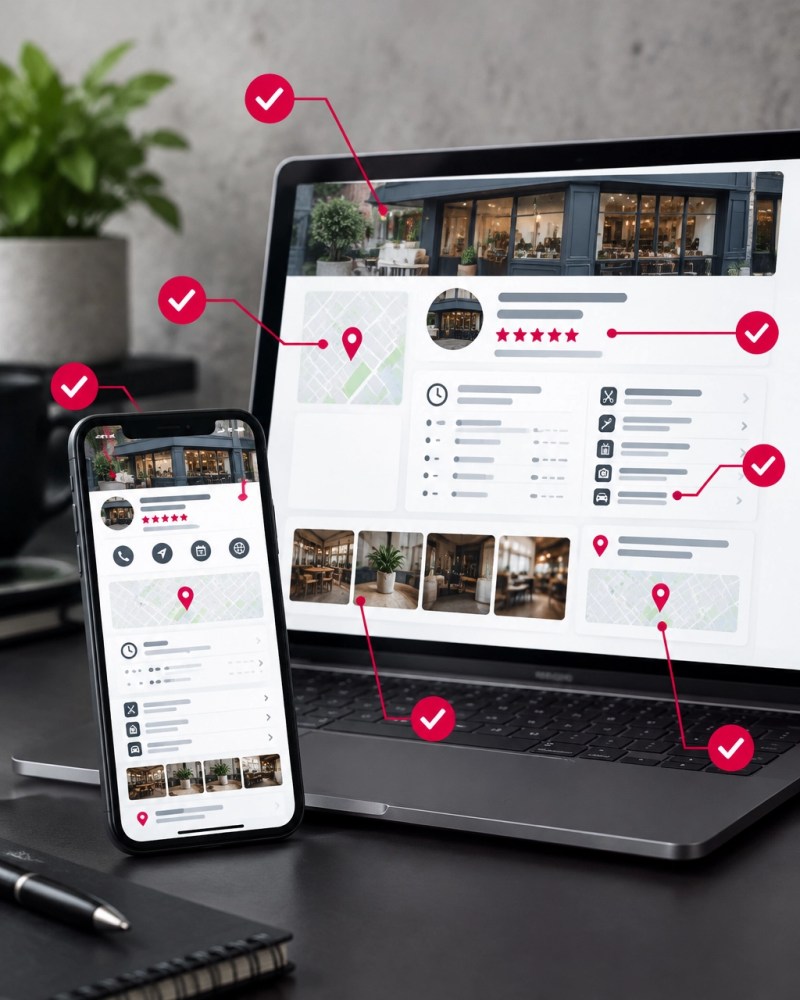
A neglected profile creates uncertainty. A complete profile gives search systems usable facts.
Do reviews help AI recommend your business?
Yes, but not because five stars magically unlock visibility.
Reviews help create a public record of customer experience. They also reveal the language customers use when describing your work.
A review that says “Barion helped me clarify my offer and build a stronger online presence” provides more useful context than “Great service!”
Ask satisfied customers for honest, specific feedback. Do not script fake reviews. Do not offer incentives for positive ratings. Those shortcuts can damage trust and violate platform policies.
Build a simple review process:
- Ask after a clear win or completed project.
- Send a direct link to your preferred review platform.
- Invite the customer to describe the problem, process, and result.
- Respond to every review professionally.
- Address criticism without arguing publicly.
Review quality matters.
So does review consistency.
Third-party review sites, industry directories, and local publications can also reinforce your business identity. AI systems compare those sources against your website and business listings. Conflicting information creates friction.
Why does consistent NAP matter?
NAP means name, address, and phone number.
Your business name, location, and contact details should match across:
- Google Business Profile
- Your website
- Apple Business Connect
- Bing Places
- Yelp
- Chamber of commerce listings
- Industry directories
- Social media profiles
- Press coverage
- Professional networks
Do not use “Barion McQueen Consulting” on one listing, “Barion McQueen Business Coaching” on another, and an old phone number somewhere else.
Consistency strengthens entity recognition.
That means search systems can connect the same business across multiple sources instead of treating each listing as a separate or questionable entity.
Run a citation audit twice a year. Fix old addresses, duplicate listings, broken websites, and inconsistent phone numbers.
Small errors compound.
Clean data builds confidence.
Can structured data improve AI visibility?
Structured data gives search engines extra context about your pages. It helps connect your business name, address, services, social profiles, reviews, and website content into a clearer entity.
For local businesses, consider relevant LocalBusiness structured data. Depending on your business, you may also use Organization, Person, Service, Article, or FAQPage markup.
Use structured data honestly.
Your website should visibly display the information you mark up. Do not invent ratings, locations, awards, services, or customer claims. Structured data does not guarantee an AI citation or a rich result. It simply makes important facts easier to interpret.
Think of it as labeling the boxes in your warehouse.
The information already exists. You are making it easier to find.

What content does AI actually want to cite?
AI systems need answer-ready content.
That means you should stop publishing generic posts such as “Five Ways to Grow Your Business” without explaining anything concrete. Create pages that respond to real buyer questions.
Build content around searches like:
- How much does personal branding coaching cost?
- What should a small business include on its Google Business Profile?
- How can a service business get its first 100 customers?
- What should entrepreneurs post on LinkedIn?
- How do I improve my local search visibility?
- Should I hire a PR agency or handle media outreach myself?
- What is the best marketing plan for a bootstrapped business?
Answer the question in the first few paragraphs. Use clear headings. Include examples, processes, mistakes, costs, timelines, and next steps.
Create:
- Detailed service pages
- Location pages where relevant
- Customer FAQs
- Case studies
- Comparison articles
- Founder or expert interviews
- Original research
- Practical checklists
- Updated guides
Your content should also connect to your personal brand. Share what you have actually seen in real businesses. Explain the decisions behind your recommendations. Show your experience across industries.
That is how online presence for business becomes authority instead of decoration.
Your practical AI citation checklist
Use this checklist over the next 30 days.
Week one: Clean your business data
- Complete every relevant Google Business Profile field.
- Confirm your name, address, phone, website, and hours.
- Remove duplicate listings.
- Update social profiles and directory pages.
- Add accurate service categories.
Week two: Strengthen trust signals
- Request honest reviews from recent customers.
- Respond to every existing review.
- Add testimonials to your website.
- Publish credentials, awards, speaking appearances, and partnerships.
- Claim your LinkedIn company or professional profile.
Week three: Build answer-ready content
- Publish one detailed service page.
- Add an FAQ section to your most important page.
- Write one comparison or “how to choose” article.
- Create a case study with a specific problem and measurable result.
- Add relevant internal links between your pages.
For a practical starting point, follow Barion McQueen’s 7-Day Local SEO Sprint.
Week four: Earn independent mentions
- Submit your business to relevant industry directories.
- Contact local organizations about educational partnerships.
- Pitch useful expertise to journalists and podcast hosts.
- Publish guest articles where your audience already reads.
- Look for legitimate “best of” guides and local resource pages.
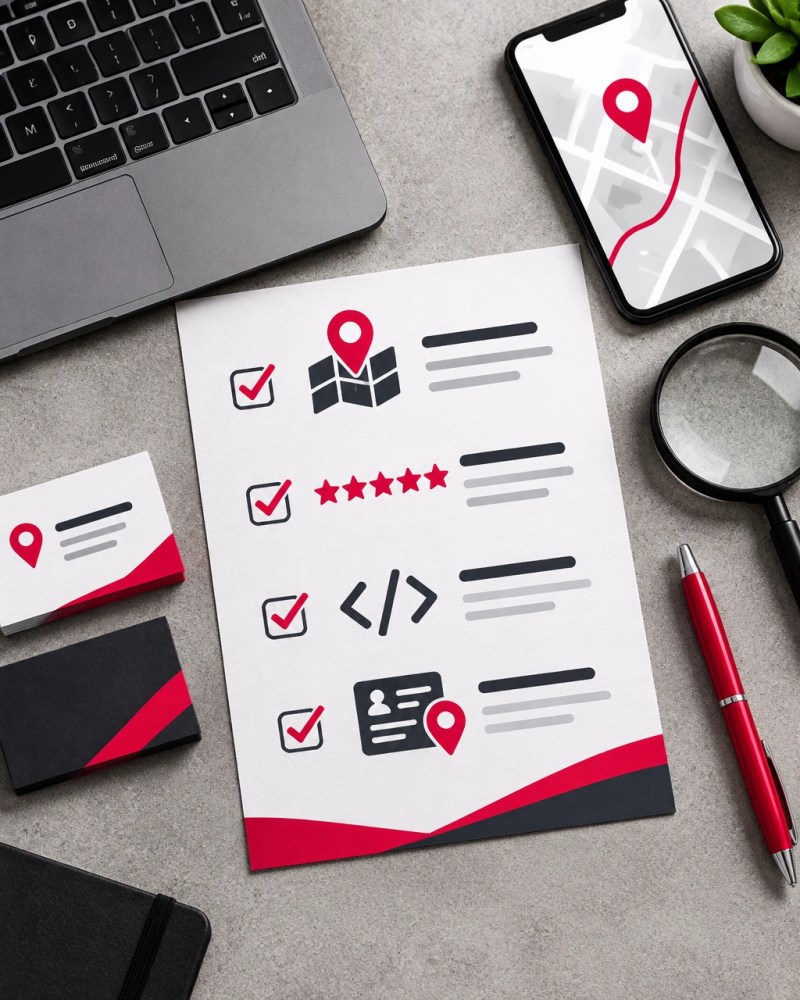
Then test your visibility.
Ask ChatGPT, Gemini, Perplexity, and Google different versions of your target questions. Search by service, location, audience, and problem. Record which businesses appear and which sources they cite.
Do not obsess over one result.
Track patterns.
If competitors repeatedly appear in local guides, review platforms, and comparison pages, those sources deserve your attention. If AI cites your website but describes your service incorrectly, improve your pages and business listings.
What does this mean for your marketing strategy?
AI search makes digital marketing more connected.
Your Google Business Profile supports local search. Your reviews support trust. Your website explains your services. Your personal branding creates recognition. Third-party mentions validate your claims.
These signals work together.
You do not need to chase every new platform. You need to build a reliable online presence for business that answers customer questions wherever they search.
Start with the One-Page Marketing Plan, then strengthen the assets that support it. Your visibility grows when your message stays consistent across your website, profiles, content, and conversations.
AI cannot recommend what it cannot verify.
Make your business easy to verify.
Frequently asked questions
Can I pay to guarantee that ChatGPT cites my business?
No. Advertising may create visibility on certain platforms, but no legitimate service can guarantee an organic AI citation. Build trustworthy, relevant, and consistent public information instead.
Do I need special AI SEO software?
Not to begin. First fix your Google Business Profile, website content, reviews, structured data, and third-party listings. Software helps with monitoring, but it cannot replace a credible business presence.
How long does AI search visibility take?
It varies by industry, competition, authority, and content quality. Some updates may appear quickly. Stronger visibility usually requires consistent work over several weeks or months.
Should I stop focusing on Google?
No. Google remains a major discovery channel. AI search builds on many of the same fundamentals, including helpful content, local relevance, technical accessibility, and trust.
Five new article ideas to build your authority
- The Complete Google Business Profile Audit for Service Businesses
- How to Turn Customer Reviews Into Better Website Content
- Personal Branding for Local Business Owners: What to Post Every Week
- The Best Third-Party Listings for Consultants, Coaches, and Agencies
- How to Create a Local SEO Content Calendar in 30 Minutes
The future of search rewards businesses that communicate clearly, prove their value, and show up consistently.
Build the evidence now.
Then let your customers, and the AI tools they trust, find you.