
Your marketing does not need more complexity. It needs direction.
A one-page marketing plan forces you to answer the questions that drive revenue: Who do you serve? What do you sell? Why should customers choose you? Where will they find you? How will you measure progress?
No bloated 40-page document. No vague mission statement. No “post more on social media” strategy.
Just a focused operating plan you can review every week.
The U.S. Small Business Administration’s marketing plan example offers a useful foundation. You can also compare it with HubSpot’s free marketing plan template. But your plan must do more than sit in a folder.
It must tell you what to do next.
“Where do I start?” Start with one business goal.
Your marketing plan needs one primary target for the next six to twelve months.
Choose a number. Add a deadline.
Examples:
- Generate 120 qualified leads in the next 12 months.
- Sign 30 new consulting clients by December.
- Increase monthly revenue from $10,000 to $20,000 within six months.
- Sell 500 products through your online store this year.
- Book 10 paid speaking engagements before the end of the quarter.
Avoid listing seven “top priorities.” That creates seven distractions.
Choose one outcome. Then connect every marketing activity to it.
If your goal involves new customers, track leads and sales. If your goal involves visibility, track qualified traffic, media mentions, and inquiries. If your goal involves retention, measure repeat purchases and referrals.
Your goal becomes the filter. If a tactic does not support it, remove it.
One clear goal beats a page full of intentions.
“Who exactly am I trying to reach?” Define one primary audience.
“Small business owners” is not a target audience. It is a category.
Your audience needs sharper edges.
Write one or two sentences using this structure:
I help [specific type of customer] who struggle with [urgent problem] and want [measurable outcome].
For example:
I help independent real estate agents who struggle to stand out online and want a steady flow of qualified seller leads.
Or:
I help local service businesses that rely on referrals but want predictable inquiries from Google and social media.
Now answer five practical questions:
- What does this customer sell or do?
- What problem keeps appearing on their calendar?
- What have they already tried?
- What event pushes them to seek help?
- Where do they look for answers?
Look for real-world details. Your ideal customer may check Google after losing a major client. They may scroll LinkedIn during lunch. They may ask a business-owner group for recommendations. They may download three guides before booking one call.
Those details shape your message and your channel choices.
Do not build one message for everyone. Build one useful message for the person most likely to buy first.
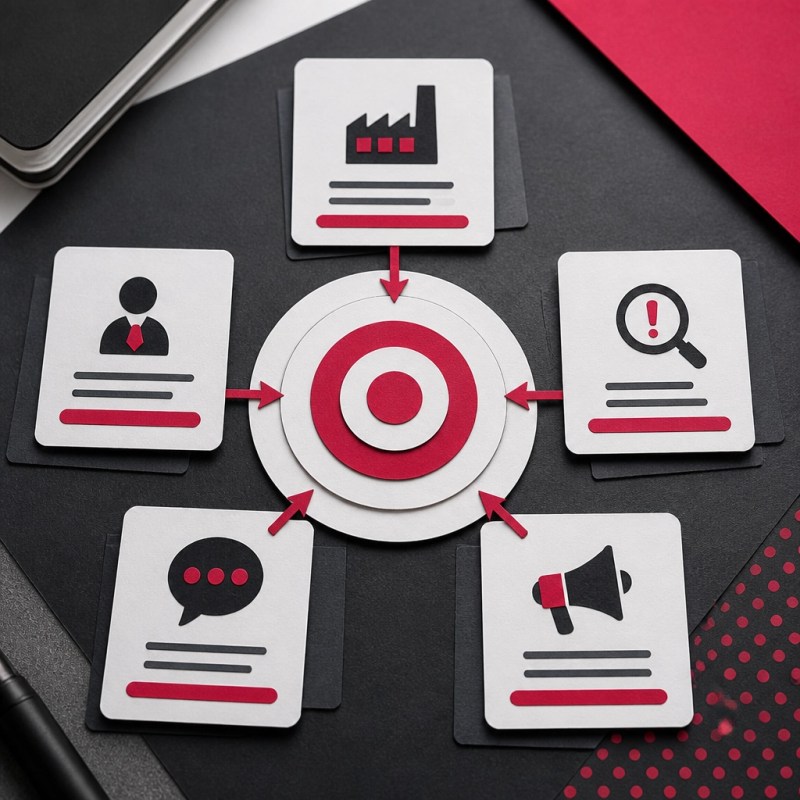
“Why should customers choose me?” Clarify your positioning.
Your positioning explains the space you own in the customer’s mind.
It answers one question:
Why you instead of the next business offering something similar?
Use this formula:
We help [audience] achieve [desired result] through [specific method or advantage].
Examples:
- We help bootstrapped founders earn attention through practical personal branding and do-it-yourself media outreach.
- We help local businesses turn their websites, Google presence, and social channels into consistent lead sources.
- We help experienced professionals become more visible, credible, and memorable through strategic content and public speaking.
Strong positioning combines three ingredients:
- A specific audience
- A valuable outcome
- A credible difference
Your difference might come from industry experience, a clear process, faster implementation, affordability, or a perspective competitors ignore.
Do not write, “We provide high-quality solutions.” Every competitor says that.
Say what you change. Show how you change it. Name who benefits.
Your personal brand also strengthens this section. Customers often connect with the person behind the business before they trust the logo. Your experience, point of view, and proof can turn a generic service into a recognizable authority.
Positioning is not decoration. It gives every marketing message a job.
“What am I actually selling?” Build a clear offer.
Your offer must connect directly to the audience’s urgent problem.
Write down:
- Flagship offer: What do you sell?
- Best-fit customer: Who should buy it?
- Core problem: What does it solve?
- Outcome: What changes after purchase?
- Price or terms: What does the customer need to know?
- Next step: What should they do now?
A service description explains activities. An offer explains value.
Weak:
We provide marketing consulting and social media support.
Stronger:
We help established service businesses clarify their message, rebuild their online presence, and create a 90-day lead-generation system through hands-on consulting.
You also need a low-friction entry point. This could include:
- A free marketing audit
- A website or SEO checklist
- A short strategy call
- A downloadable guide
- A live workshop
- A sample consultation
- A product demonstration
Then choose one primary call to action:
- Book a consultation
- Request a quote
- Download the guide
- Start a trial
- Buy the product
- Join the workshop
Do not give visitors five competing instructions. Guide them toward one logical next move.
A clear offer turns attention into action.
“Which marketing channels should I use?” Choose two or three.
You do not need to dominate every platform. You need to show up consistently where your customers already pay attention.
Assign each channel one role.
| Channel | Primary role | Example activity |
|---|---|---|
| Website and SEO | Lead generation | Publish problem-solving articles and optimize service pages |
| Google Business Profile | Local discovery | Collect reviews, update services, answer questions |
| Nurture and retention | Send one useful message every week | |
| Authority and relationships | Share insights, case studies, and founder lessons | |
| Awareness and proof | Publish visual tips, results, and behind-the-scenes content | |
| Referrals and partnerships | Trust-based acquisition | Build relationships with complementary businesses |
| Paid advertising | Scalable testing | Promote one proven offer to one defined audience |
Start with one primary channel, one supporting channel, and one relationship channel.
For a local contractor, that may mean Google Business Profile, a conversion-focused website, and referral partnerships.
For a consultant, it may mean LinkedIn, email, and a personal website.
For an online store, it may mean SEO content, email, and Instagram.
Social media needs its own plan. Choose one main platform first. Adapt the content to that platform instead of copying the same post everywhere. Barion McQueen’s social media guidance emphasizes the same principle: each platform demands its own strategy, voice, and format.
Your channel list should fit your capacity. An abandoned account damages trust faster than a smaller, active presence.
Focus creates consistency. Consistency creates recognition.
“How do I turn attention into customers?” Build the lead path.
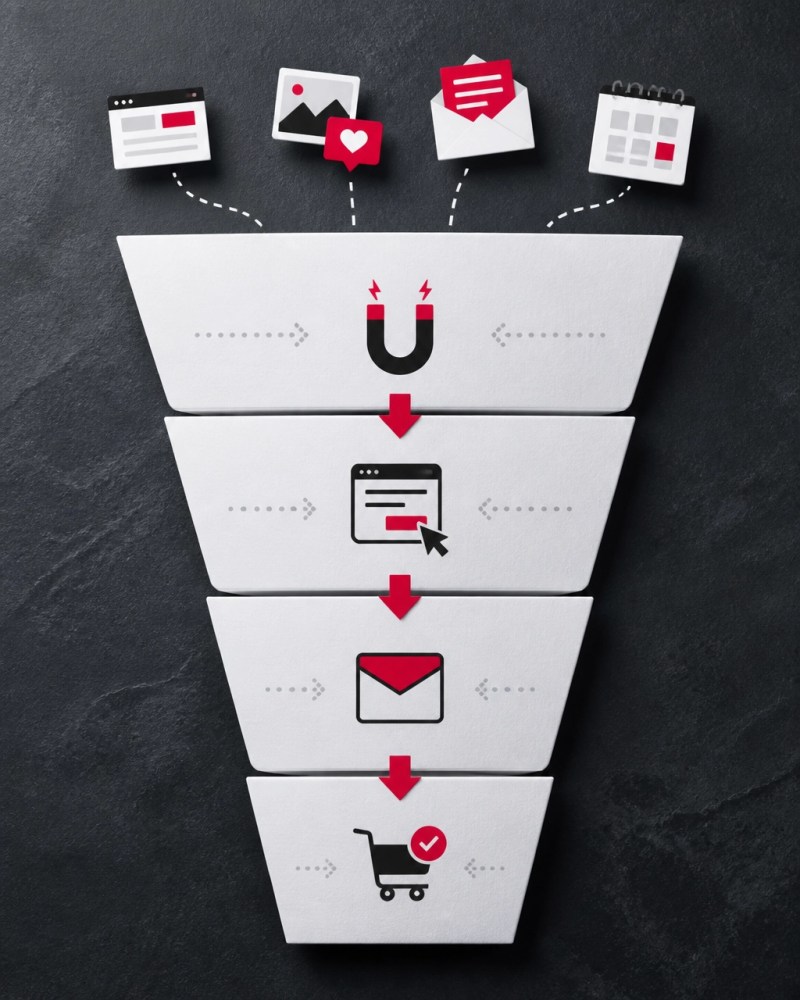
Your marketing system should move people through five stages:
Traffic → Lead capture → Nurture → Offer → Sale
Map the path on your one-page plan.
Traffic
Identify how people discover you:
- Search engines
- Social media
- Referrals
- Events
- Media coverage
- Partnerships
- Paid campaigns
- Direct outreach
Lead capture
Give interested visitors a clear way to continue. Use a form, booking page, email signup, direct message, or checkout page.
Your lead magnet should solve a small but relevant problem. A generic “sign up for updates” rarely motivates action. A “10-minute website visibility checklist” gives the visitor a reason to respond.
Nurture
Most leads do not buy immediately. Follow up with useful information:
- A welcome email
- A quick win
- A case study
- A customer story
- An answer to a common objection
- A clear explanation of your offer
- A direct invitation to talk or buy
Keep the sequence simple. Five helpful emails can outperform an elaborate automation system you never finish.
Conversion
Make the next step easy. Use a clear booking page, short form, simple checkout, or direct sales process.
Tell prospects what happens next. Explain the timeline. Show proof. Remove friction.
“How do I know what is working?” Track the numbers closest to revenue.
Likes can encourage you. They cannot pay your invoices.
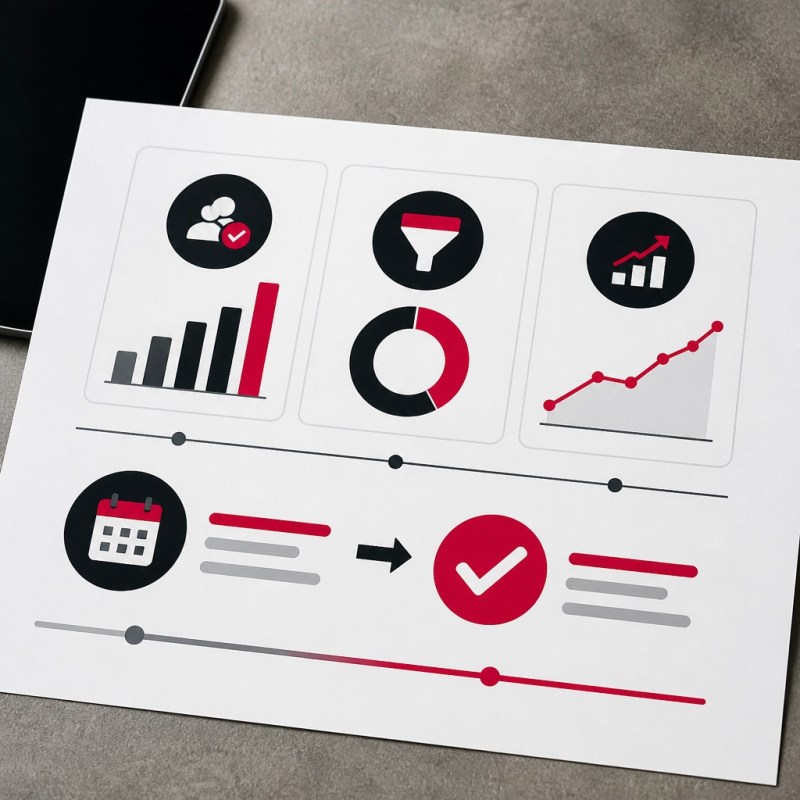
Track three to five key performance indicators. Start here:
- Qualified leads generated
- Lead-to-customer conversion rate
- Cost per lead
- Number of sales
- Revenue generated by channel
Add channel-specific metrics when useful:
- Website conversion rate
- Search traffic to service pages
- Google Business Profile calls and direction requests
- Email clicks and replies
- Social profile visits and link clicks
- Referral inquiries
Set a target for each metric.
For example:
- 10 qualified leads per month
- 25% lead-to-customer conversion rate
- 5 new email subscribers per week
- $8,000 in monthly revenue from marketing
- 3 referral conversations each month
Review leading indicators weekly. Review sales and revenue monthly.
If your social reach increases but inquiries remain flat, fix the offer or call to action. If traffic grows but visitors leave, improve the page. If leads arrive but do not buy, strengthen your follow-up and sales process.
Data does not replace judgment. It sharpens it.
“What should I do during the next 90 days?” Turn the plan into a rhythm.
Your one-page plan only matters when it changes your weekly behavior.
Set a repeatable schedule:
- Publish two or three useful social posts each week.
- Send one email to your audience.
- Create or improve one conversion asset.
- Contact three past customers or referral partners.
- Review your lead and sales numbers.
- Test one headline, offer, CTA, or landing-page element.
Choose three projects for the next 90 days:
- Clarify your positioning across your website and social profiles.
- Build one lead magnet and a short nurture sequence.
- Improve the page or channel that should generate your next customers.
Keep the list short. Finish the work.
For practical support with strategy, branding, and growth, explore Barion McQueen’s business consulting services. You can also review the site’s blog resources for additional guidance on content, marketing, and entrepreneurship.
Your plan does not need to predict everything. It needs to create the next right action.
Your one-page marketing plan template
Copy this structure into a document and complete it today:
Primary goal:
I will achieve [number] by [date].Audience:
I help [specific customer] solve [urgent problem] so they can [desired outcome].Positioning:
We are the best choice because [specific difference].Offer:
Our primary offer is [offer], which helps customers [result].
Our next step is [CTA].Channels:
Primary: [channel] for [role].
Supporting: [channel] for [role].
Relationship: [channel] for [role].Lead system:
We attract people through [source], capture them with [lead offer], nurture them using [method], and convert them through [sales process].Metrics:
We will track [three to five KPIs] every [week/month].Next 90 days:
- [project one]
- [project two]
- [project three]
Print it. Put it beside your computer. Review it before launching another campaign or creating another random post.
A focused marketing plan will not eliminate hard work. It will stop you from wasting hard work in the wrong direction.
One page. One audience. One offer. One measurable path to growth.