
Your first 100 customers will not come from posting random tips and waiting for the algorithm to notice you. They come from a focused offer, consistent trust-building content, and direct conversations that move prospects from social media to a clear next step.
You do not need to dominate every platform.
You need a system.
What should you fix before you publish anything?
Start with your customer.
Not “small businesses.” Not “anyone who needs help.” Those descriptions sound broad, but they give your content nowhere to land.
Define one specific customer and one urgent result.
For example:
- “I help local dentists attract more high-value patients.”
- “I help new real estate agents generate qualified buyer appointments.”
- “I help busy founders turn messy operations into simple systems.”
- “I help service businesses improve their websites and convert more visitors.”
Your audience should recognize themselves in your first sentence.
Then define your flagship outcome. What changes after someone hires you? More booked appointments? Better leads? A faster sales process? Stronger visibility?
Make the promise concrete.
Next, build one simple conversion asset. This could include:
- A booking page
- A free audit
- A short consultation
- A downloadable checklist
- A fixed-scope starter service
Keep the page lean. Explain the problem, show proof, describe the outcome, and provide one call to action.
Nothing more.
Your profile, content, and offer must point in the same direction. When your message changes every week, prospects hesitate. When your message stays clear, trust compounds.
Your first 100 customers need clarity before they need content.
Which social platform should you choose?
Choose the platform where your customers already spend time and where you can communicate your expertise naturally.
That usually means selecting one primary platform and one supporting channel.
For B2B consultants, agencies, coaches, and professional services, LinkedIn often provides the strongest starting point because buyers already use it to research expertise, companies, and service providers.
For visual, local, or lifestyle-driven services, Instagram, TikTok, or Facebook may create stronger discovery opportunities. Local Facebook groups can also connect you with people actively asking for recommendations.
Do not spread yourself across five platforms because a social media “expert” told you to do it. That creates five neglected profiles and a mountain of unfinished content.
You need repetition.
Use the platform that matches your buyer, your format, and your strengths:
- LinkedIn: insights, business lessons, case studies, written authority
- Instagram: carousels, short videos, Stories, testimonials, visual proof
- TikTok: quick education, demonstrations, direct opinions, behind-the-scenes content
- Facebook: local groups, community discussions, referrals, live sessions
- YouTube: deeper tutorials, interviews, walkthroughs, searchable expertise
Adapt the content to each platform instead of copying and pasting the same post everywhere. Barion McQueen’s guide on five social media marketing tips to grow your business makes the same point: every platform rewards a different style of communication.
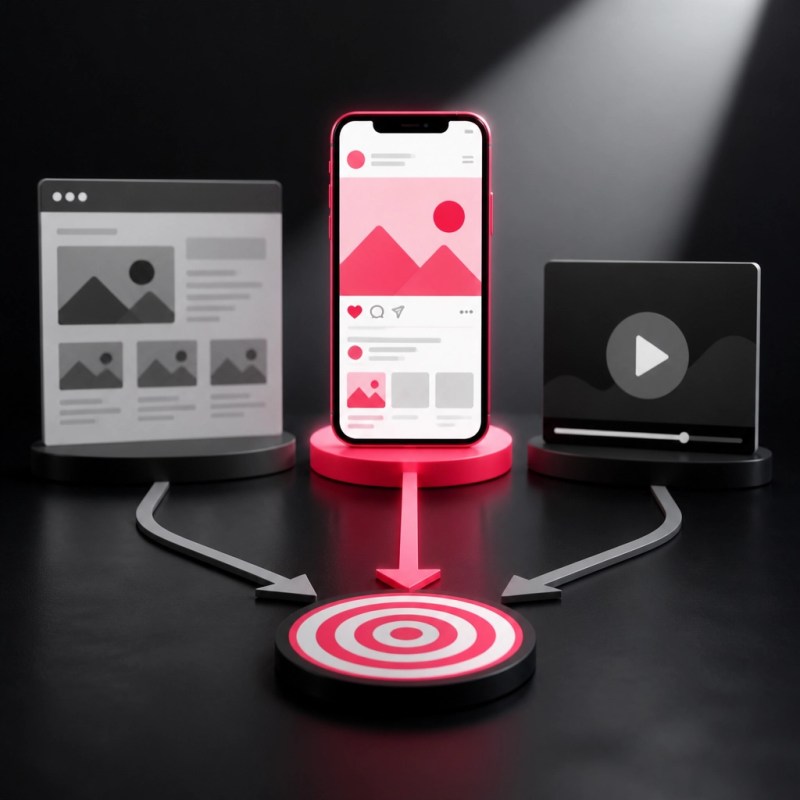
One focused platform beats five abandoned ones.
What should you post to build trust?
Your content needs four jobs:
- Help people solve a problem.
- Show how you think.
- Prove that your method works.
- Make the next step obvious.
A simple weekly mix handles all four.
1. Teach one practical lesson
Explain something your ideal customer can use immediately.
Examples:
- “Three reasons your website visitors never book.”
- “How to price a service without undercharging.”
- “The five questions to ask before hiring an agency.”
- “Why your social media posts get likes but no leads.”
Use plain language. Show examples. Include the mistake, the fix, and the action your reader should take today.
2. Share your point of view
Information alone does not create a memorable brand. Your perspective does.
Talk about the advice you reject. Explain what failed in your own business. Break down the difference between marketing hype and a strategy that works in the real world.
This is where personal branding matters. Customers want to know who stands behind the service, not just what the logo claims.
As Barion explains in Leveraging Social Media for Unstoppable Personal Branding, your online presence gives people a way to understand your expertise, values, and personality before they ever contact you.
Let people hear your voice.
3. Show proof
Do not hide your best evidence on a testimonials page nobody visits.
Turn proof into regular content:
- A client win
- A before-and-after result
- A short testimonial
- An anonymous account teardown
- A screenshot of positive feedback
- A breakdown of the work behind the outcome
Explain what you did. Explain why it mattered. Explain what changed.
Never make vague claims such as “We help businesses grow.” Show the actual path: a clearer offer, a stronger landing page, a better follow-up process, or a campaign that generated qualified conversations.
4. Make a direct offer
Value-first does not mean sales-free.
Tell people how to work with you.
Offer a free audit, a strategy call, a starter package, or a limited number of consultation slots. Use one primary call to action across your profile and content so prospects do not have to guess what happens next.

Trust grows when your content teaches, reveals, proves, and invites.
How often should you post?
Start with three useful posts each week.
That is enough to build momentum without turning your business into a full-time content studio.
Use this structure:
- Monday: Educational post
- Wednesday: Story, opinion, or behind-the-scenes post
- Friday: Case study, testimonial, or offer
Add Stories, short updates, or thoughtful comments when you have something useful to say. Do not post empty motivational quotes just to maintain a streak.
Consistency matters because customers need repeated exposure before they feel confident enough to buy. They may see your first post and forget it. They may save your second. They may read three more before sending a message.
That is normal.
Keep a running list of customer questions. Every question becomes a potential post. Every objection becomes a potential video. Every client result becomes a potential case study.
You will never run out of ideas when you listen closely.
How do you turn attention into conversations?
Your posts should lead to a conversation, not a dead end.
Use low-friction calls to action:
- “Comment ‘audit’ and I’ll send the checklist.”
- “Send me the word ‘strategy’ if you want help applying this.”
- “Book a 20-minute review through the link in my profile.”
- “Reply with your biggest obstacle, and I’ll point you in the right direction.”
When someone comments, respond publicly first. Then continue privately when the conversation becomes specific.
Do not open with a hard pitch.
Start with questions:
- “What are you currently doing to solve this?”
- “How long has this been a problem?”
- “What result are you trying to reach?”
- “Would it help if I showed you the first thing I would fix?”
A useful DM should feel like a professional conversation, not an automated ambush.
Once you understand the problem, recommend the next step. That could mean sending a resource, booking a call, or explaining that your service is not the right fit.
Honesty builds more trust than pressure.
What should your sales funnel look like?
Keep it simple:
Content → Conversation → Qualification → Call → Offer → Follow-up
Your content creates awareness. The conversation reveals the problem. Qualification confirms whether you can help. The call gives you room to diagnose the situation. Your offer connects the problem to a specific outcome.
Do not turn a 20-minute consultation into a confusing presentation about every service you provide.
Recommend one clear solution.
Then follow up with:
- The problem you heard
- The opportunity you identified
- The service you recommend
- The expected next step
- The deadline or timing discussed
Send the recap quickly. Momentum disappears when follow-up takes five days.

Attention creates opportunity; conversations create customers.
How do you reach customers one through 100?
Your approach should change as your customer base grows.
Customers 1–10: activate your network
Start with people who already know your character and work ethic.
Contact former colleagues, past clients, professional contacts, friends, and community members. Tell them exactly who you help and what result you deliver.
Do not send a vague announcement that says, “I’m starting a business. Let me know if you need anything.”
Say:
“I help independent service businesses improve their online presence and turn more website visitors into booked calls. I’m opening three starter-project spots this month. Who comes to mind?”
Ask for introductions. Offer a pilot project where appropriate. Deliver excellent work. Collect permission to share the result.
Customers 11–30: join existing conversations
Find the communities where your buyers already ask questions.
Participate in local groups, professional communities, LinkedIn discussions, and industry forums. Answer questions with detail. Share examples. Correct bad advice without attacking the person who posted it.
Do not treat every group like an advertising board.
Become useful first.
Customers 31–60: publish proof consistently
At this stage, your content should show patterns.
Share what you have learned from client work. Build repeatable content series. Publish mini case studies. Address the same core problem from different angles.
This is when prospects begin to think, “I keep seeing this person explain my problem clearly.”
That recognition matters.
Customers 61–100: add referrals and collaborations
Happy clients can accelerate your growth faster than another month of random posting.
Ask for referrals directly. Create a simple referral reward where it fits your business. Partner with complementary providers for joint webinars, live sessions, interviews, or educational posts.
A web designer can collaborate with a copywriter. A business coach can partner with an accountant. A real estate professional can work with a mortgage broker.
The right partnership puts your expertise in front of a trusted audience.

Your first 100 customers come through relationships, not reach alone.
What should you measure?
Track business outcomes, not applause.
Monitor:
- Qualified comments
- Direct messages
- Discovery calls booked
- Show-up rates
- Proposals sent
- Customers acquired
- Revenue by platform
- Referrals generated
- Content that influenced a sale
Likes can help distribution, but they do not pay your invoices.
Review your numbers every two weeks. Identify which topics created conversations and which offers generated calls. Then create more of what works.
Drop what does not.
Your social media strategy should improve through evidence, not ego. Barion’s personal branding guide reinforces the foundation: clarify what makes you valuable, communicate it consistently, and give potential customers a reason to remember you.
That is the playbook.
Choose your customer. Pick your platform. Teach useful lessons. Show proof. Start conversations. Make a clear offer. Follow up.
You do not need viral reach to build a real service business.
You need 100 people who trust you enough to take the next step. When you are ready to strengthen that process, explore Barion McQueen’s business consulting services or contact the team to turn your attention into a stronger customer-acquisition system.